
Tooth Sensitivity Treatment in Ghaziabad – Causes, Fixes & Prevention Guide
Tooth Sensitivity Treatment in Ghaziabad: Causes, Fixes & Prevention for Indian Diets
Tooth Sensitivity Treatment in Ghaziabad is now one of the most common reasons people visit Aryas Dental & Implant Clinic, especially working professionals and students. Hot chai, cold shakes, spicy chaat and festival mithai can all trigger sharp zaps of pain that last only a few seconds but disturb your entire day. In this guide, Dr. Anushri Arya and Dr. Sankalp Arya explain why your teeth suddenly react to hot, cold or sweet foods, which home remedies really help, and when painless clinical treatments are needed.
What Causes Tooth Sensitivity?
Tooth sensitivity usually appears when the outer enamel layer thins or the gums recede, exposing dentin tubules that link directly to the nerve inside the tooth. Once these tiny channels are open, any temperature or sweetness change can reach the nerve quickly and cause a sharp jolt.
From the experience of Dr. Anushri Arya and Dr. Sankalp Arya, typical causes in Ghaziabad and Indirapuram patients include:
Aggressive brushing with a hard brush that slowly wears away enamel near the gum line.
Acidic foods and drinks such as imli chutney, lemon water, fizzy drinks and pickles that soften enamel.
Plaque and gum disease, which make gums pull back and expose root surfaces.
Teeth grinding or clenching during high‑stress NCR jobs creates micro‑cracks and notches.
Recent dental work (fillings, whitening, deep cleaning) or hidden cracks that temporarily irritate the nerve.
In humid NCR conditions, oral bacteria multiply faster on sugary snacks like paan, sweets and packed juices, increasing the risk of plaque, decay and sensitivity if brushing is irregular.
Tooth Sensitivity Symptom Checklist
You may be dealing with Tooth Sensitivity Treatment in Ghaziabad if you notice:
A sharp, quick pain lasting 2–10 seconds when you have cold water, ice cream or sweets.
Twinges while brushing, especially at the neck of the tooth near the gums, even without visible cavities.
More discomfort in canines and premolars, where enamel is thinner, and abrasion is common.
Night‑time sensitivity after very hot dinners, soup or tea.
If this pain continues for more than two weeks, wakes you up at night or comes with swelling, bad smell or visible cracks, book an appointment at Aryas Dental & Implant Clinic. It may be a deep cavity, fracture or nerve infection rather than simple sensitivity.
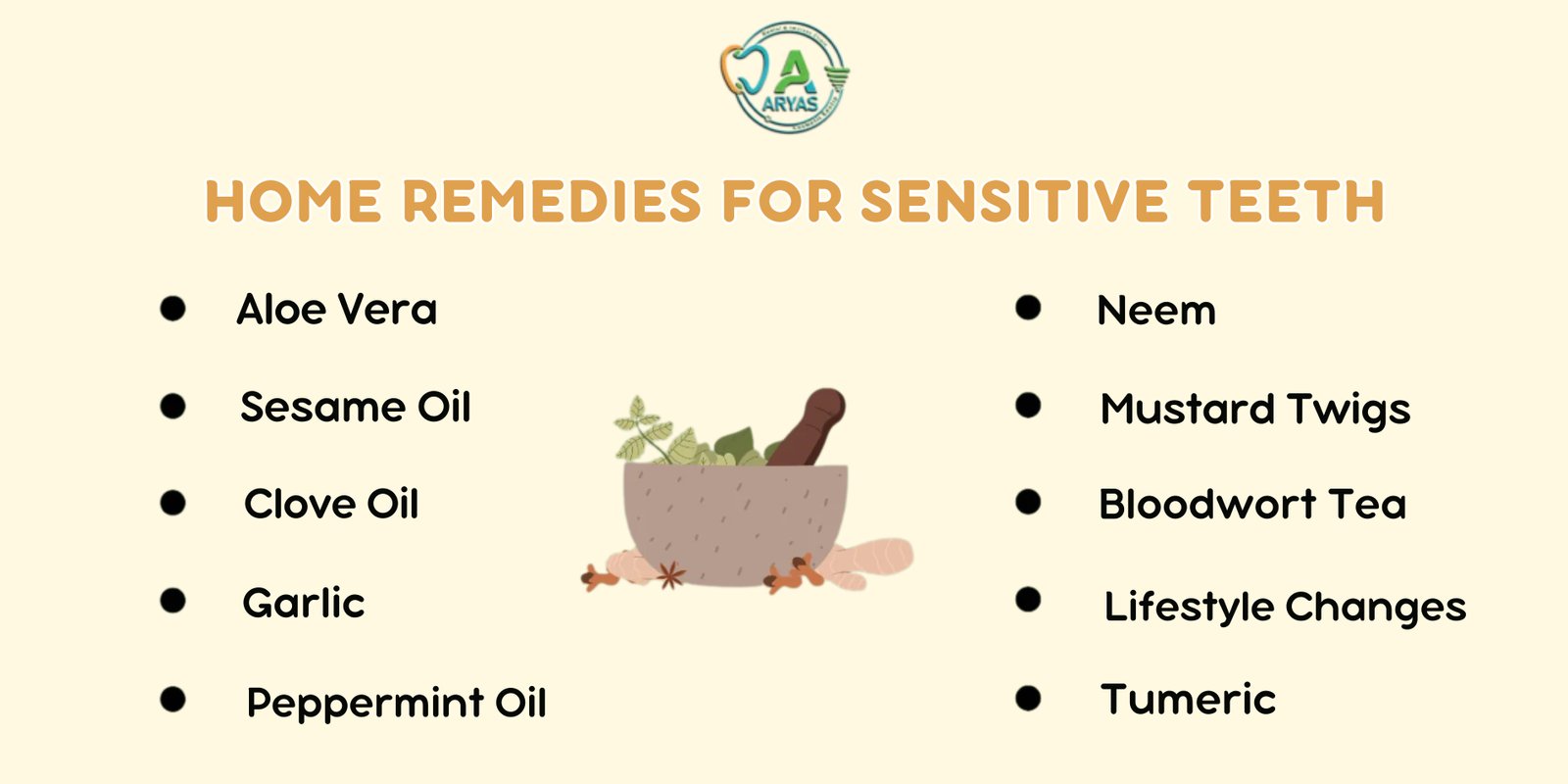
Home Remedies for Quick Relief
For mild Tooth Sensitivity Treatment in Ghaziabad, Dr. Anushri Arya and Dr. Sankalp Arya usually recommend starting with simple home and pharmacy‑based steps. These often give good relief but should not delay a proper check‑up if symptoms are strong.
Desensitizing Toothpaste
Use a desensitising paste containing potassium nitrate or strontium salts, which help block open dentin tubules and calm nerve response. Brush twice a day gently with a soft brush and do not rinse immediately so the paste can stay on teeth longer.
Clove Oil Rinse
Add 1–2 drops of clove oil to a glass of lukewarm water, rinse for 30 seconds and spit out. Eugenol in clove provides mild numbing and antibacterial support. Avoid frequent use of strong, undiluted clove oil directly on the gums.
Saltwater Rinse
Dissolve half to one teaspoon of salt in a glass of warm water and rinse after meals. This simple step reduces inflammation and helps the gums stay healthy.
Temperature & Texture Control
For a few days, avoid extremes like ice, freezer‑cold water and very hot chai or soup. Choose lukewarm roti‑sabzi, khichdi, dal and soft paneer instead of hard nuts or seeds that may strike sensitive spots.
Brush Smart, Not Hard
Shift to a soft or extra‑soft toothbrush, hold it at a 45‑degree angle to the gums and use short, gentle strokes. Many patients who come to Aryas Dental & Implant Clinic for painless dental treatment in Indirapuram have sensitivity mainly due to over‑brushing with hard bristles.
If these changes do not improve symptoms within 1–2 weeks, visit the clinic so the team can check for cracks, deep decay or gum problems.
Read More: Ayurvedic Oral Immunity Guide by Aryas Dental Clinic, Ghaziabad
Professional Tooth Sensitivity Treatments at Aryas Dental & Implant Clinic
When home care is not enough, Aryas Dental & Implant Clinic offers several targeted options to treat Tooth Sensitivity treatment in Ghaziabad and Indirapuram, while keeping procedures as gentle and painless as possible.
After a detailed examination with X‑rays or digital scans, Dr. Anushri Arya or Dr. Sankalp Arya may suggest:
|
Treatment |
Best For |
Typical Visits |
How It Helps |
|
|
Fluoride varnish/gel |
Mild to moderate sensitivity |
1–2 short visits |
Re‑mineralises enamel and blocks exposed tubules. |
|
|
Bonding or sealants |
Exposed root surfaces, worn edges |
1 visit |
Covers exposed dentin with tooth‑coloured resin. |
|
|
Gum grafting |
Severe gum recession |
1–2 visits |
Adds/moves gum tissue to cover sensitive roots. |
|
|
Laser desensitisation |
Localised deep dentin sensitivity |
1–3 sessions |
Alters tubules and reduces nerve reaction to stimuli. |
For patients who clench or grind, a custom nightguard is fabricated to protect enamel and prevent new wear, especially after root canal or crown work. Because the doctors focus on conservative dentistry and painless dental treatment Indirapuram, they treat the cause early, which keeps costs and discomfort lower compared to late‑stage care.
Indian Diet Tweaks for Stronger, Less Sensitive Teeth
Ghaziabad diets are rich in taste and tradition, but also in acid and sugar. Instead of strict bans, Dr. Anushri Arya and Dr. Sankalp Arya suggest practical tweaks that fit daily life.
Rinse with plain water after tangy chaat, golgappa or citrus‑heavy chutneys instead of brushing immediately. This removes acids without scrubbing softened enamel.
Wait 30 minutes after eating acidic foods or drinking fizzy drinks before brushing so the enamel can harden.
Add calcium‑rich foods dahi, paneer, and milk to help neutralise acid and support remineralisation.
Replace colas and energy drinks with water, buttermilk or unsweetened green tea when possible.
Enjoy mithai and desserts with meals, not as frequent solo snacks, to reduce the number of acid attacks on teeth.
Patients who follow these dietary changes alongside treatment at Aryas Dental & Implant Clinic often report fewer sensitivity episodes and stronger teeth over time.
Prevention Tips from Dr. Anushri Arya & Dr. Sankalp Arya
Life in Ghaziabad Indirapuram is busy, but prevention is always easier and more affordable than emergency treatment.
Book professional cleaning every 6 months to remove tartar and early stains before they damage gums and enamel.
Use soft or electric toothbrushes and avoid medium or hard bristles unless specifically advised.
Address grinding and clenching with stress management, posture correction or a nightguard if your dentist sees wear facets.
Stay hydrated, especially in AC offices, to maintain saliva flow and natural remineralisation.
Protect children’s teeth with fluoride pastes, regular check‑ups and sealants as recommended; this significantly lowers future sensitivity risk.
Because the clinic focuses on comfortable, painless dental treatment in Indirapuram, many families now consider Aryas Dental & Implant Clinic among the options when searching online for the best dentist in Ghaziabad for long‑term care.
FAQs: Tooth Sensitivity Treatment in Ghaziabad & Indirapuram
Q1. After sensitivity starts, what foods are safest?
Soft, lukewarm foods such as dal‑chawal, khichdi, idli, upma and mild sabzi with rotis are usually comfortable. Avoid very hot, icy or extremely spicy items until your teeth settle.
Q2. How long does treatment usually take to work?
With desensitising toothpaste and lifestyle changes, many people feel better within 1–4 weeks. In‑clinic treatments at Aryas Dental & Implant Clinic can offer faster relief depending on the cause.
Q3. Is sensitivity treatment safe during pregnancy?
Most non‑invasive care check‑ups, cleaning, desensitising pastes and some fluoride applications are considered safe after the first trimester, but always inform your gynaecologist and dentist.
Q4. When should I stop home remedies and visit the clinic?
If pain is spontaneous, lasts more than a few seconds, wakes you at night, or appears with swelling or visible cracks, visit Aryas Dental & Implant Clinic or your nearest dentist immediately.
Q5. Does tooth sensitivity always mean I need a root canal?
No. Many cases improve with paste, varnish, bonding or diet changes. Root canal treatment is needed only when the nerve is badly infected or damaged.
Q6. Can children also have tooth sensitivity?
Yes. Kids with thin enamel, cavities or acid‑heavy diets can develop sensitivity. Regular paediatric check‑ups and fluoride‑based protection greatly reduce this risk.
